A few weeks ago, I went to Hong Kong again but this time setting out to
visit an area of H.K that I have never been too. H.K. is essentially made up of 4 areas or
districts: Hong Kong Island, the New Territories, Kowloon, and Lantau. I went to Stanley which is a town and tourist
attraction located on a peninsula on the southeastern part of Hong Kong Island
and is one of the oldest villages on Hong Kong Island. The village appeared in official Chinese
records as early as the Ming Dynasty (1573-1620). When Hong Kong Island came under British rule
in 1841, Stanley, with a population of some 2,000, was the most populous area
on the island. During the Japanese
invasion in 1941, the final encounter was in Stanley.
To get there, I had to take my usual train to downtown (Central) Hong
Kong – which is Hong Kong Island. I then
had to take a double-decker bus for about a half hour ride to Stanley
crisscrossing the Island. From my door
in Shenzhen to Stanley, you’re looking at a three and a half hour trip; keeping
in mind you have to go through immigration.
The bus ride was enjoyable because the scenery was outstanding - especially via the front seat I had on the top deck.
There are just a few attractions here but the first one I visited was
Tin Hau Temple, which is the religious hub of the area. There are many Tin Hau temples in H.K and as
I mentioned in a previous post, these temples are dedicated to the Goddess of
the Sea. This temple was built by
sea-faring people of Stanley Bay in 1767 and is one of Hong Kong’s oldest
temples. The temple’s architectural
style is similar to other temples I have visited. See pic below.

Next to Tin Hau Temple is Murray House.
Murray House is a Victorian-era building originally built in the
present-day business district of Central (downtown) in 1846 as officers'
quarters of the Murray Barracks during early British rule. It was named after Sir George Murray, the
British Master-General of the Ordnance at the time of construction. During the Japanese occupation of Hong Kong,
the building was used as the command center by the Japanese military police. It
was a venue for executing Chinese citizens during the 44-month Japanese
occupation. After World War II, several
government departments used the building as offices. The building was believed to be haunted and
was officially exorcised twice by the government. In 1982, the historical landmark was
dismantled (labeled and catalogued) to yield to the new Bank of China Tower
skyscraper. The building was restored
and relocated to the south of Hong Kong Island during the 2000s. Murray House was one of the oldest surviving
public buildings in Hong Kong. Similar
to many of its contemporaries from the early colonial era, it was designed in
Classical architecture style. The heavy
stone walls (with flat arched opening) are located on the ground floor to a
give sense of stability, while the lighter columns are placed on
the floors above to allow better ventilation. All floors have verandas on all
sides in response to the local subtropical/monsoons climate.
On the top floors of the Murray House are restaurants and on the ground
floor is the Hong Kong Maritime Museum.
I visited the museum and admission was 20 HKD ($2.50). Maritime museums are always cool and this one
was as well. The museum illustrates how
China, Asia and the West have contributed through the ages to the development
of boats, ships, maritime exploration and trade, and naval warfare. While concentrating on the South China coast
and its adjacent seas, it also covers global trends and provides a
comprehensive account of Hong Kong's growth and development as a major world
port and maritime center. There are
permanent and special exhibitions as well as a small museum shop. The museum is divided into two sections: the
ancient gallery as well as the modern one.
Below are some pics of Murray House.
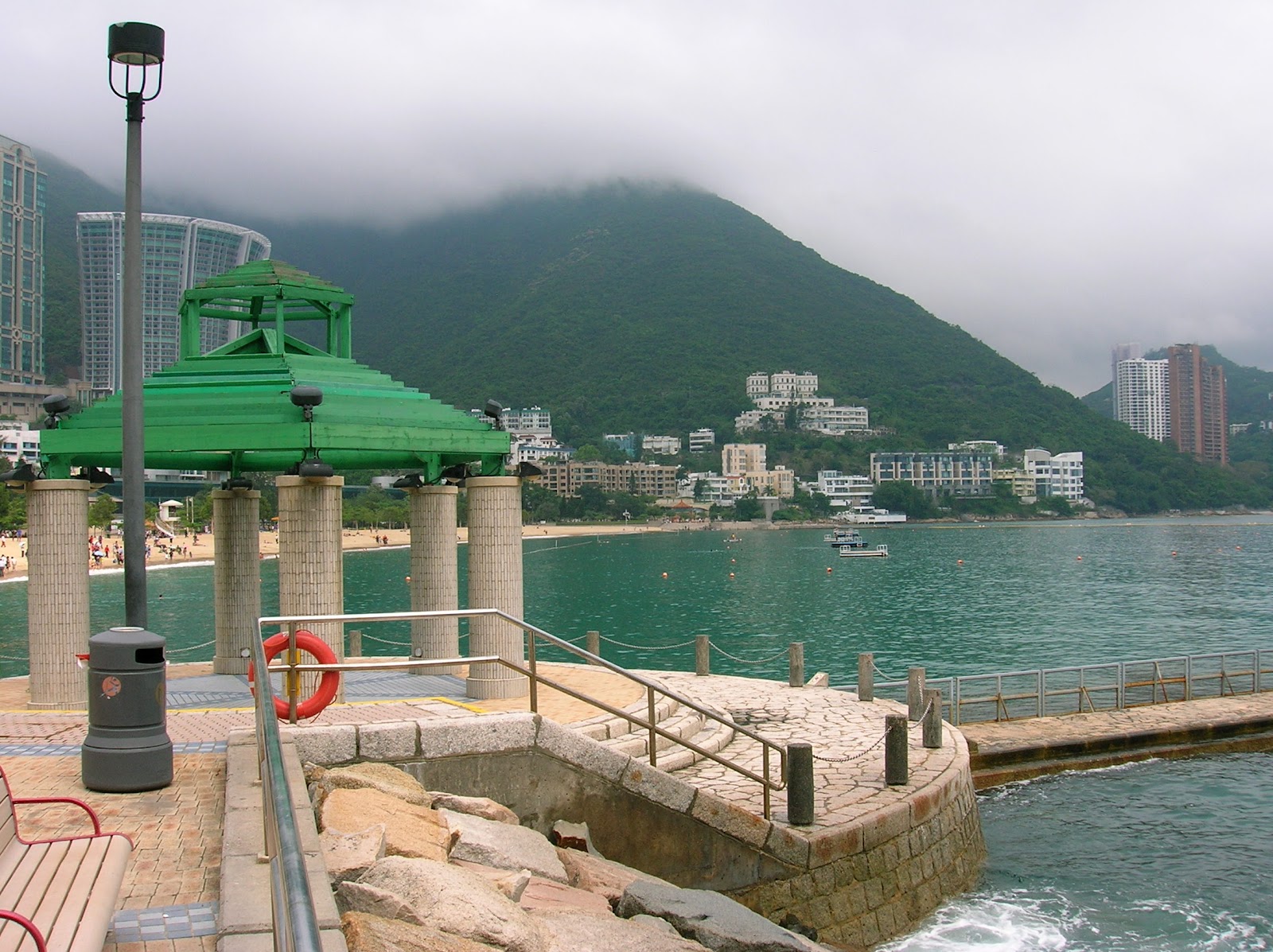
Below are some pics taken from Blake Pier next to the Murray House.
I then walked along the nearby small, quaint Stanley Main Street
located along the waterfront which has a few bars and restaurants Al-fresco
style. I stopped for a pint at the
Smugglers Inn which you can see in one of the pics below with the black
overhang.
The last pic is of Stanley Market located behind the pubs and
restaurants on Stanley Main Street. It
has become a major tourist attraction, well known for its bargains. Many of the stalls or shops in Stanley Market
sell Hong Kong souvenirs as well as clothing, toys, ornaments, luggage, paintings,
and Chinese arts and crafts.
Stanley was a cool little town (and very hot) and well worth the visit. I don’t think I’ll be back but I would have
liked to have gone back for the upcoming annual Stanley International Dragon
Boat Championships in late June (I may be in Japan – not sure yet). It is one of the biggest, most colorful
events of the year in Stanley. Stanley
Bay has been home to the races for more than 40 years. There are snack vendors and beer tents and it
looks like it would be a lot of fun watching the rowers while relaxing in the
sunshine. But, oh well…